Ever wondered how a pipe organ actually work? Us too.
Until the invention of the steam engine, pipe organs were the world’s most complex man-made machines. But how do they work? Why are there so many keyboards? And what happens when you pull out all the stops? Below, we’ll take you on a whistlestop tour (get it?) of the pipe organ, to explain its key parts and demystify this mighty instrument.
Consolation prize
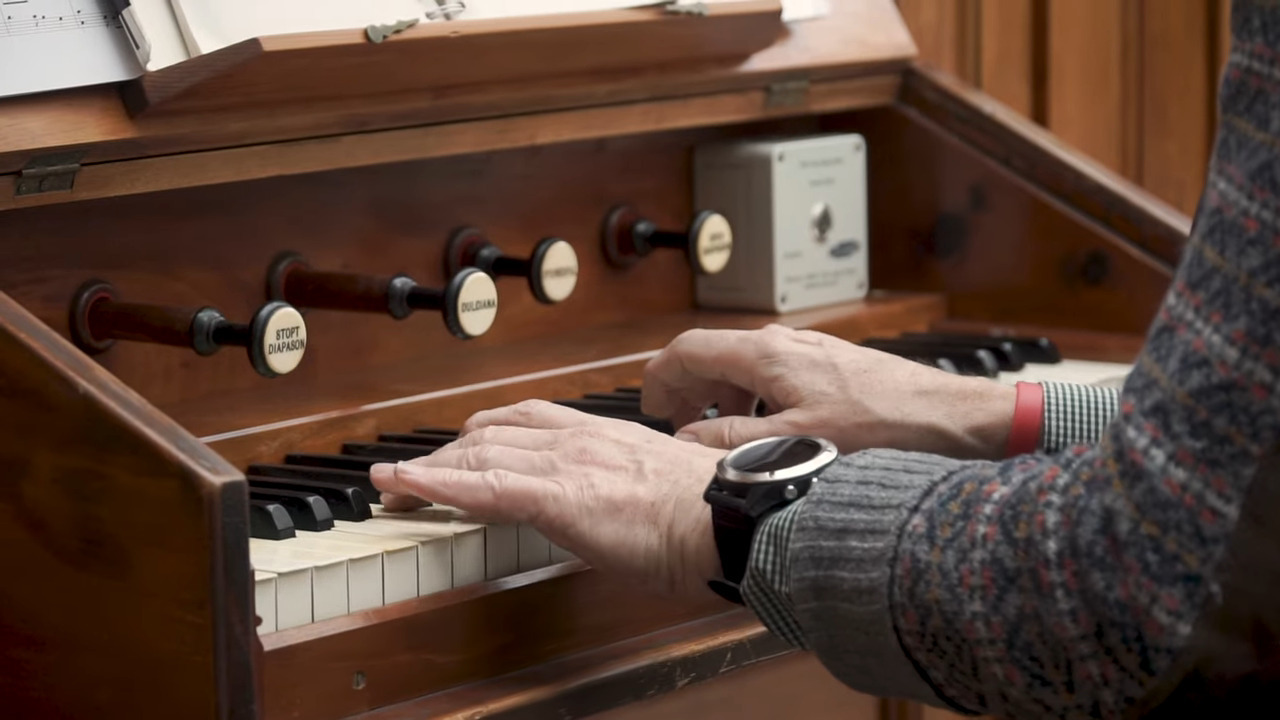
The console is the bit you can see at the front of the organ. It holds the manuals (keyboards), pedals and stops.
Manual labour
The manuals (keyboards) are the most familiar part of the organ, which you might recognise from the piano. Pressing a key creates a sound of that pitch. But the way an organ creates sound is quite different from a piano. For a piano, sound is created like this: a key is pressed – a hammer hits a string – the string vibrates. For an organ, sound is created like this: a key is pressed – a pipe is opened – air rushes in.
Pedalling away
The pedalboard is the keyboard an organist plays with their feet. These usually ‘repeat’ the lowest three octaves of the manual, so an organist can play lower notes with their feet and higher notes with their hands. Sometimes, rather spookily, you can see the manual keys being lowered without fingers pressing them down.
Stoppage time
Pulling out a stop allows air to flow through a pipe. Different stops can change the pitch, volume or timbre of the note, to make a ‘flute’, ‘horn’ or even ‘drum’ sound. Depending on their length, pulling out a stop can also change the pitch of a sound by one or several octaves. Pulling out all the stops often creates a cacophony of sound — so if you ever find yourself tempted, do proceed with caution.
Pulling out all the stops often creates a cacophony of sound — so if you ever find yourself tempted, do proceed with caution.
Pipe dreams
Each pipe can only make one sound. Since each key corresponds to a different note, and each stop changes the tone quality (timbre) of each key, organs must have pipes for all these combinations of pitch and tone. So organs can have hundreds, thousands or even tens of thousands of pipes, most of which will be hidden away, accessible only by ladder and determination.
Bellow fever
Wedge-shaped bellows pump air into the pipes. These are usually made of wood, lined with sheepskin and held down by weight blocks. Back in the day, willing labourers would have to be recruited to manually operate the bellows. Nowadays, most pipe organs have electric motors to pump air in and create the sound.
What every good shopping centre needs is an organ
That’s why we worked to re-home an unused organ in Croydon’s Whitgift Centre, free for the public to play.