No, it’s not Mariah Carey. Tom Allery’s here to tell us why Messiah is such a big hit.
Why is Messiah so popular?
There are many answers for this question! Where to start? The piece was designed to be accessible, direct in its expression, and powerful for a London audience, and this legacy and connection seems to live on. It’s a work that has not been forgotten. It’s interesting here to think about the charity tradition surrounding the piece which I think contributes to its popularity even today. The first performance in 1742 (in Dublin) was in support of three charities: for prisoners, for a hospital, and for an infirmary. The compositional circumstances of a piece of music can always be felt somehow, even centuries on. You can feel the devotion, the positivity and the values behind it – in that regard perhaps different to in Handel’s operas which were written as commercial entertainments.
For any choir, Messiah is a great and satisfying challenge, and one that doesn’t get tired.
Handel had a close relationship with the Foundling Hospital and started the annual performances there in 1750, and which continued after his death with John Stanley, and then eventually developed through the nineteenth century into a history of associating music performances with charitable giving, especially at Christmas. Somehow the balance in term of themes and music lends itself so well to new audiences too. There is just the right balance between solos and chorus, between keys, between light and dark, between recitative and aria, and so on.
Then there is its association with amateur music making across the years. For any choir, Messiah is a great and satisfying challenge, and one that doesn’t get tired. Many, many people have therefore performed at least extracts from it. How many other major works is that the case with? Then I guess there is the seasonal element! Messiah is closely associated with Christmas, and choirs are more popular at Christmas time, with lots of people enjoying joining in with carols and hearing music which tells the Christmas story.
My own first experience of Messiah was at a local ‘come and sing’ performance with organ only – also very successful, but a bit of a work out for one organist!
Size – does it matter?
Messiah is one of those pieces of choral/orchestral music which can work successfully with almost any size and combination of instrumental forces, and the performance history of the piece shows the complete range! Even today, performances range in size hugely from large scale performances with large choruses and a corresponding large orchestra (often in large venues), to smaller, more intimate versions. It says something about the piece that it is so successful and appealing to audiences in almost any configuration. In fact, my own first experience of Messiah was at a local ‘come and sing’ performance with organ only – also very successful, but a bit of a work out for one organist! The almost entirely unbroken performance tradition of the work means that it has always been able to expand or contract to suit venues and ensembles, not to mention changing tastes over the centuries…
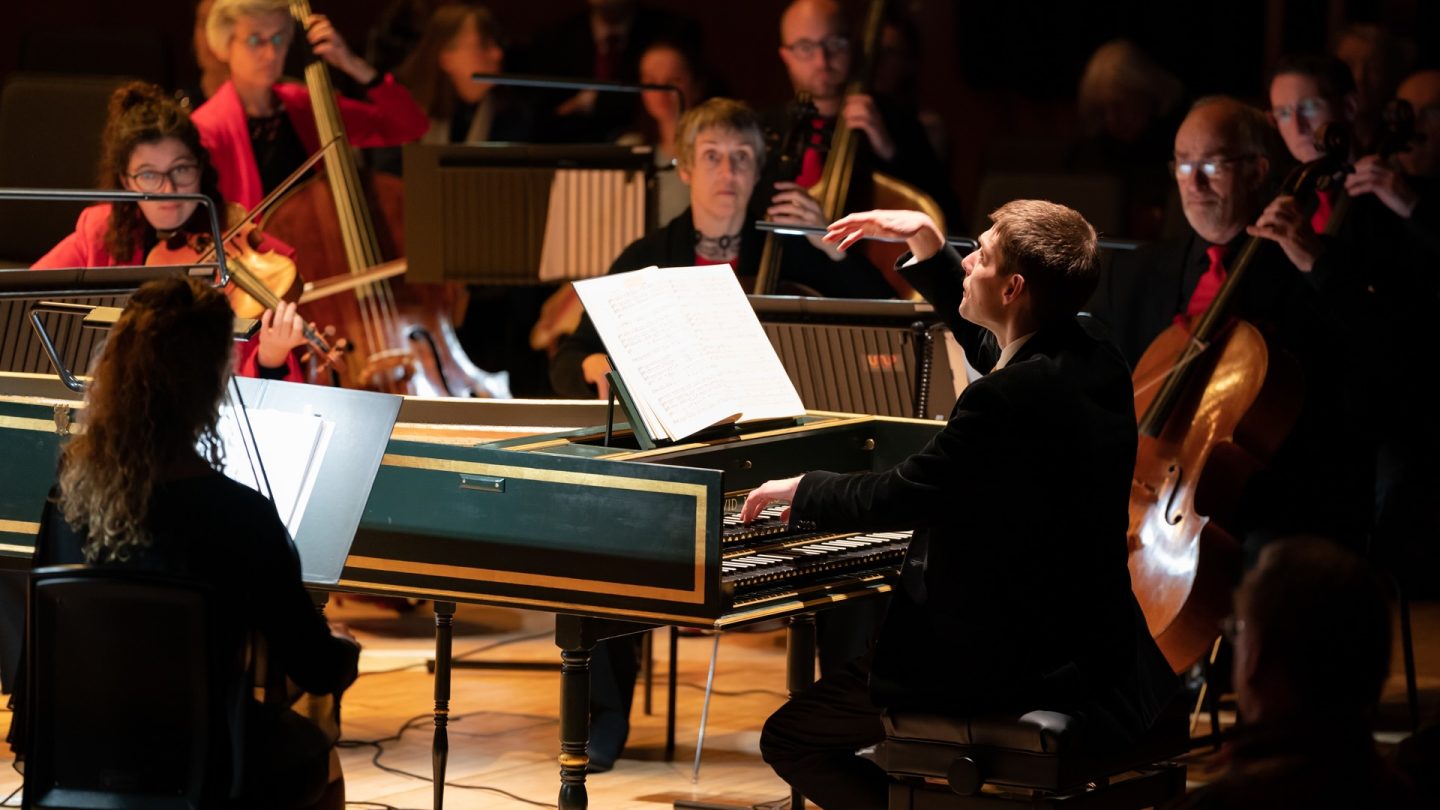
For instance, in the nineteenth century, amateur choral societies flourished across England, and with that, the tradition of large scale performances grew. At this time, new orchestrations and arrangements grew out of the practical needs for new bigger performance forces, including a new orchestration by Mozart and many arrangements for organ accompaniment. Mid nineteenth-century performances in London, such as those at Crystal Palace, had choirs of several thousand voices and huge orchestras numbering 500! These days, many performances are of a smaller number of singers and players which can be a little more intimate and with a chamber feel – including with directors playing the continuo themselves.
Messiah, but make it 360
We worked with Tom to create our immersive Handel staging, with the audience placed in a ring around the orchestra.