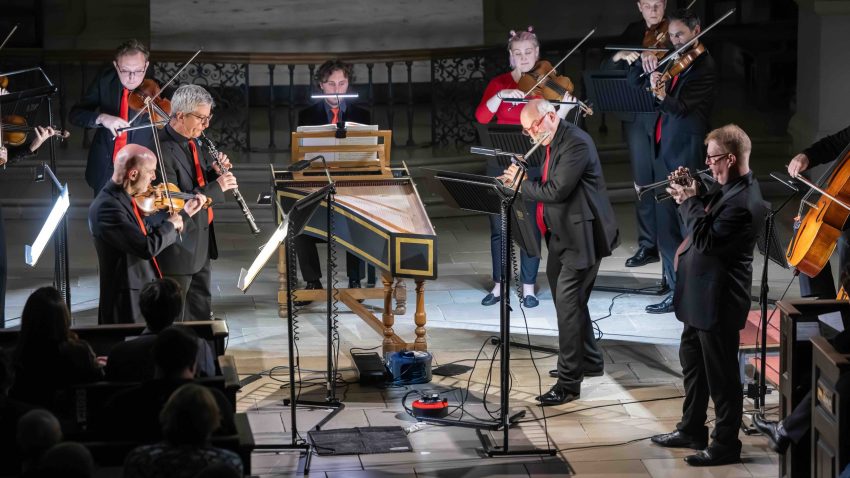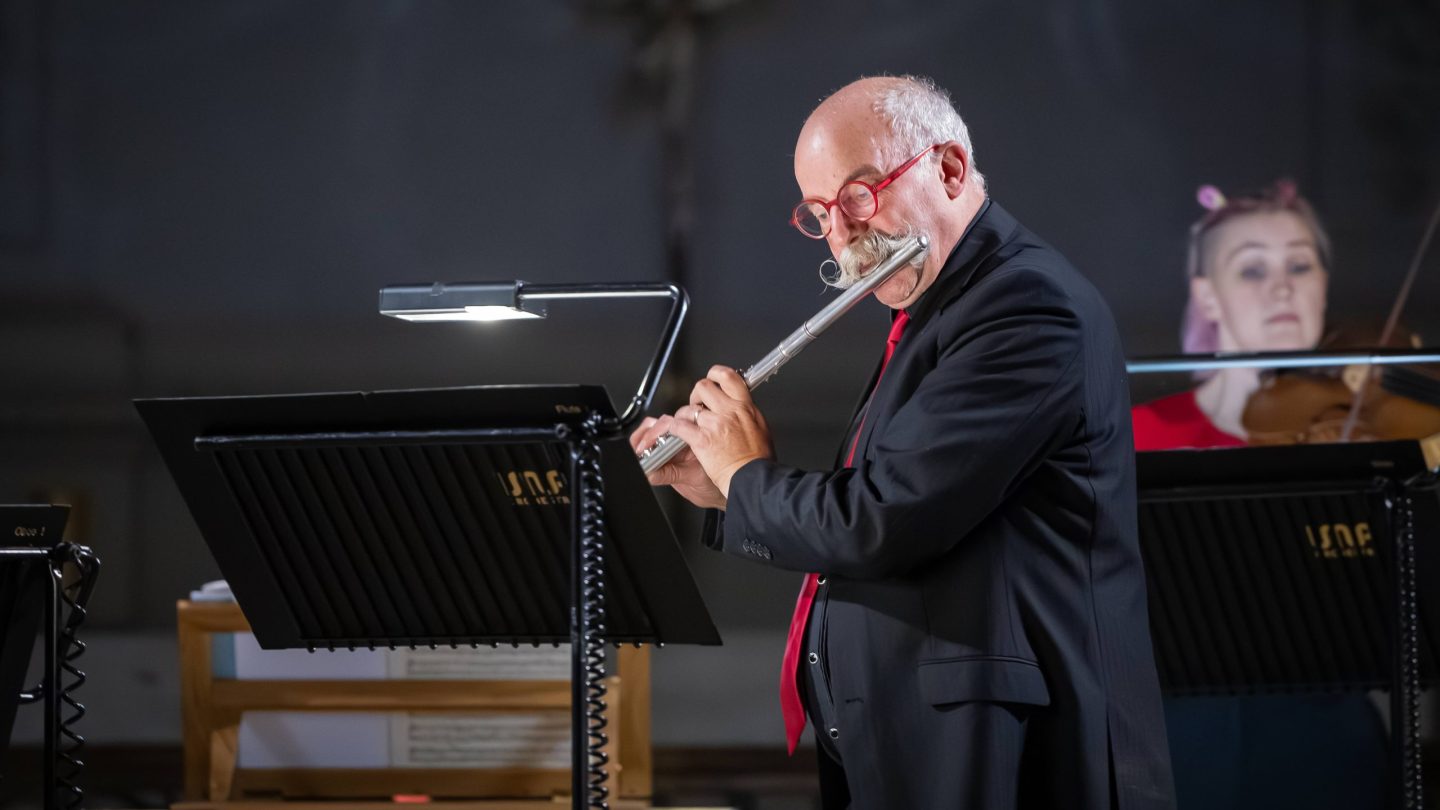
Our Principal flute, Michael, tells us about Bach’s playful side.
Bach wrote for the Baroque flute, which has a very different sound from today’s modern flute. How does this affect your interpretation of his flute writing?
I play the baroque flute (or traverso) as well as the modern flute. It definitely influences the way I make and use the airstream when playing on my silver flute & encourages me not to fully access the more industrial strength and attack that inherently comes with it. More importantly though, I feel that knowing the modus operandi of the traverso informs a sensitivity about how things “like” to be phrased and how the old flutes express so amazingly. It is often a very different ethos.
The word ‘badinerie’ comes from the French for ‘jest’ or ‘playfulness.’ How do you bring out that character?
Those descriptives are indeed apt but to be honest, irrespective of the title, the sense of ebullience, mischief and itchy-footed dance is so strongly suggested by the music itself that I would find it hard NOT to play this famous movement with playfulness. Another translation of “badinerie” – definitely my favourite model to use for performance inspiration – is, banter. The movement has such a feeling of chatter and wit.
Another translation of "badinerie" - definitely my favourite model to use for performance inspiration - is, banter. The movement has such a feeling of chatter and wit.
What would you encourage us to listen out for in the Brandenburgs – especially in terms of the flute’s role?
Bach’s music is fascinating and incredible in that it is written so idiomatically for each instrument and, at the same time, is such bulletproof and rigorous abstract music. Whilst we can admire how consummately well Bach crafts his writing for the flute, just as he does for all other instruments, at the same time we know the music would still sound amazing if played in an arrangement for xylophone, brass or saxophone ensemble! The thing I particularly love in these works is the kaleidoscopic interweaving and shifting focus of the various solo and tutti orchestral lines.
What’s your usual concert day routine?
I live in Devon so I often regret that, on concert days, I can’t have the peace and quiet of home life to balance the demands and excitement of performance. It also means it is hard for me to find somewhere to practise. Instead, I will ensure I am fully practised up in advance, I will do a little teaching at the Royal Academy of Music perhaps and/or have a little down time – often at a favourite coffee shop. The stress of getting to the venue in time for the rehearsal is often significant for musicians so I will always try to arrive with masses of time to spare. By doing so, I can be warmed-up and well-settled-in before the fun and games all kick off.
If you liked this, take a look at these
LMP Play Bach’s Brandenburgs
Four Seasons across the World: Vivaldi and Piazzolla