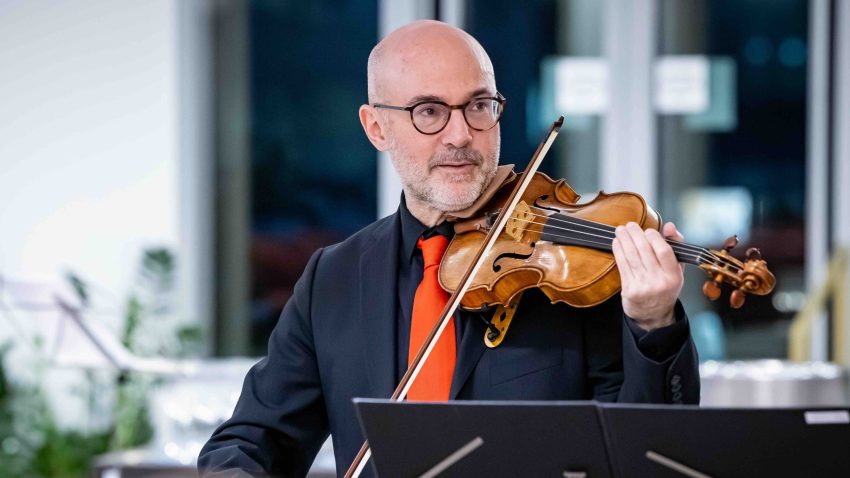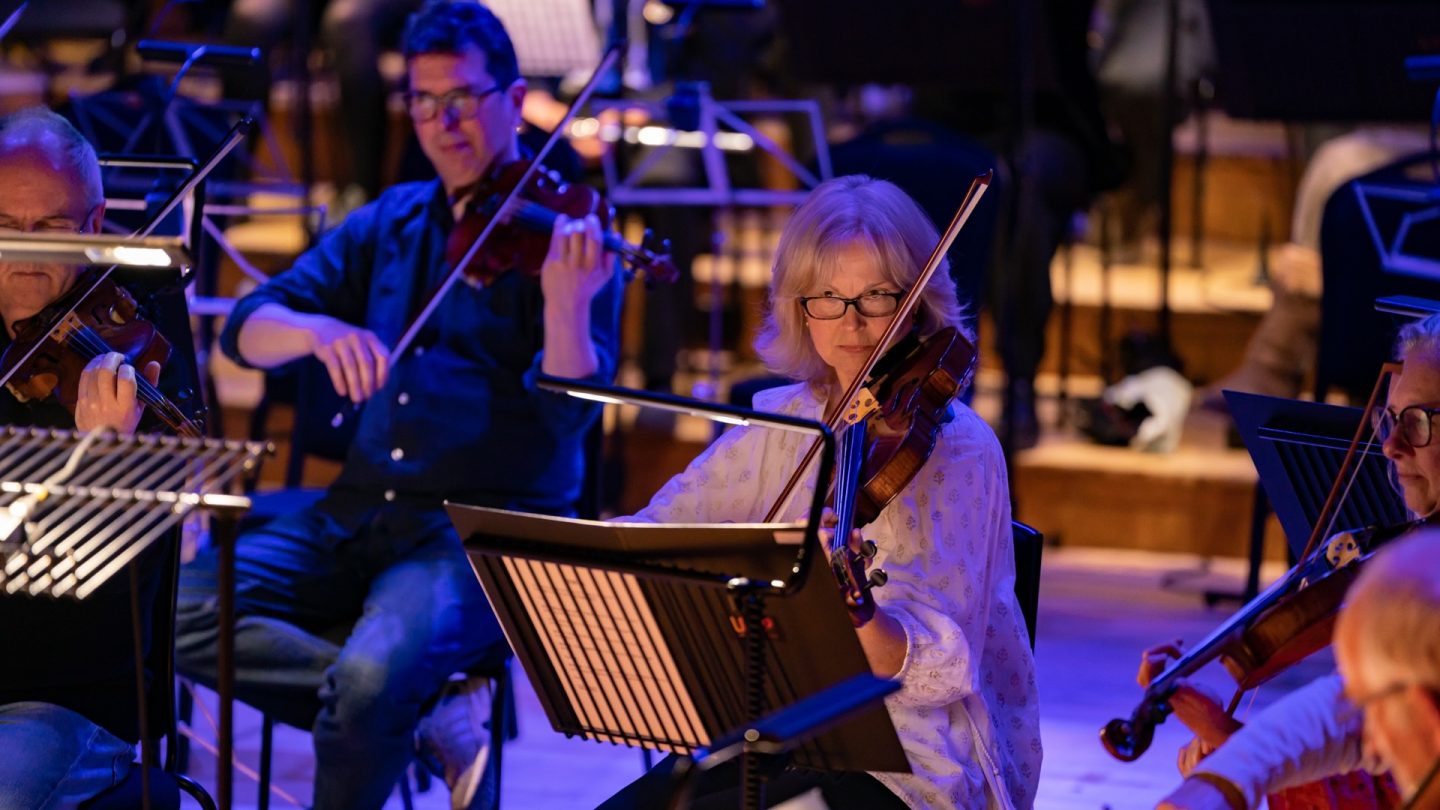
Our Principal viola, Judith, explains how music can provide a sense of escapism.
What are your thoughts on The Lark Ascending?
I have always loved this joyous piece and especially at this time of year (April) when we are finally moving towards warmer weather and we can start to see the skylarks soaring upwards, courting whilst singing. As we yearn to transcend the troubles of our world it is a wonderful way to escape to an idyllic image of rural English life, imagining these evocative birds, spiralling ever higher, depicted with such impressionistic skill by Elgar and with the orchestra providing earthly support (including a folk dance) under the violin’s rhapsodic cadenzas.
It is a wonderful way to escape to an idyllic image of rural English life, imagining these evocative birds, spiralling ever higher.
Tell us about the part the viola plays in Dvořák’s Serenade.
Dvořák’s sunny Serenade for strings is always a pleasure to play. Nearly all the way through he makes use of “divisi” violas where we are playing 2, 3 or even 4 lines at the same time within our own section, providing a rich, mellow and warm bed of harmonic texture. You will hear this immediately at the beginning of the piece but it continues through all 5 movements. The lyrical Larghetto begins with divisi violas alone supporting the first violin melody; and in the jubilant, ‘folk dance’ finale we chug along in 2 or 3 parts for much of the movement. Dvořák, himself a viola player, played in dance bands as well as being principal viola in the opera orchestra, and he never gave the instrument a part that was merely ‘filling in’. He knew that it speaks with a language and a character of its own.
Enjoyed reading this? Take a look at these