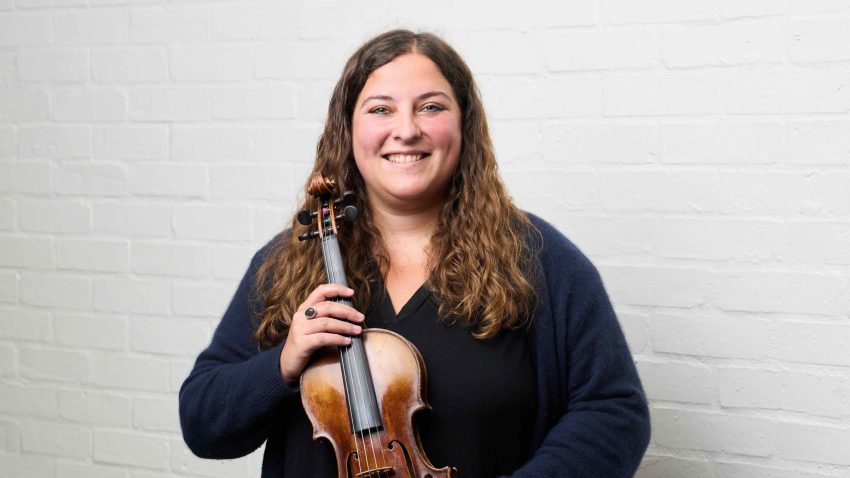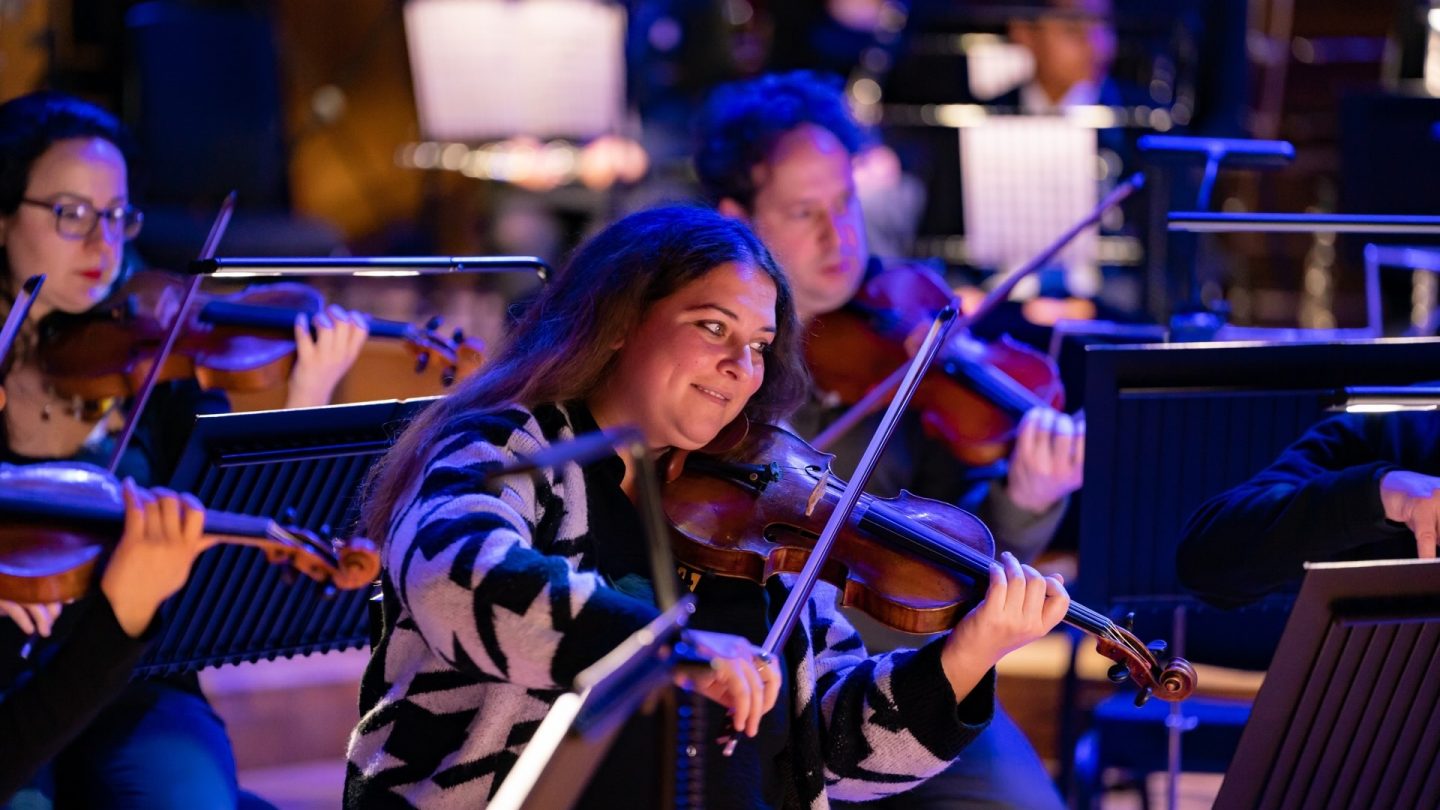
Here’s how our Principal Second Violin, Antonia, prepares for a concert day when it involves a lot of Mozart.
What’s your approach to interpreting works by Mozart – does it differ to other orchestral composers?
When preparing a Mozart programme, my approach begins – much like with any repertoire – by exploring a range of recordings. I particularly enjoy listening to orchestral interpretations from different decades, as the stylistic choices can vary significantly and offer valuable insights. Once I’ve identified a version that feels stylistically aligned with how LMP might approach the piece, I often play along with it. This is especially useful as a second violinist, since we frequently take on an accompanying role. Playing alongside the recording helps me internalise the phrasing and understand how our lines support and interact with the melody. Fortunately, Mozart’s second violin parts are generally less technically demanding than those of later composers like Tchaikovsky or Shostakovich. As a result, I tend to focus more on listening and stylistic preparation for Mozart, whereas with more technically complex works, I might devote more time to practising and navigating the challenges of the part itself.
Playing alongside the recording helps me internalise the phrasing and understand how our lines support and interact with the melody.
What is your usual concert day routine?
First order of business: coffee. Then I’ll run through a few of the trickier corners on the violin, just to remind my fingers what they’re supposed to be doing, before packing my bag with the essentials: concert clothes and a hefty number of snacks. Time for coffee number two. If I’m driving to the venue, I’ll queue up a few podcasts to keep me company – my current favourite is Off Menu with Ed Gamble and James Acaster (highly recommend if you enjoy food and chaos in equal measure). I usually aim to arrive about an hour before rehearsal, just in time to… you guessed it… sneak out for one last pre-rehearsal coffee before the real work begins.
The orchestra becomes one unified, responsive body, carefully shaping every phrase around the soloist.
How do you find performing opera arias in concert, compared to performing instrumental works?
As someone who doesn’t regularly work with opera orchestras, I always enjoy the chance to perform opera arias in concert. It brings a completely different kind of listening and collaboration to the ensemble. The orchestra becomes one unified, responsive body, carefully shaping every phrase around the soloist. As you’ll hear tonight, there are plenty of soloistic moments that emerge from the texture – little flashes of character and colour that support the drama of the aria. It’s fascinating how our phrasing changes when we’re responding to text; as instrumentalists, we don’t often have words to guide our musical storytelling, so accompanying a singer gives us a unique opportunity to shape the music in a more vocal, expressive way.
We've picked out some other bits you might like