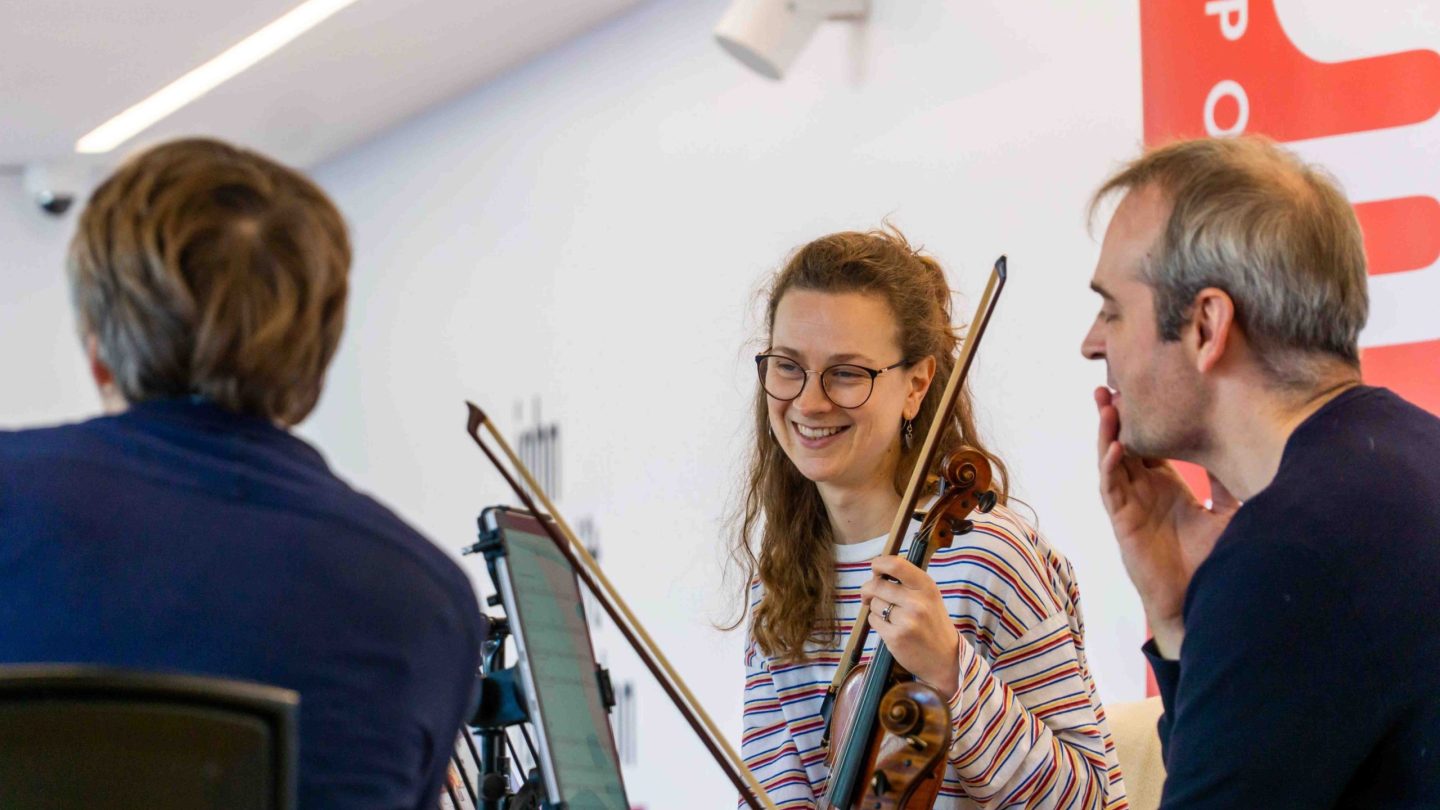
LMP Violinist Jess Coleman talks us through what gives Haydn’s ‘Hen’ Symphony its character.
What do you think gives Symphony No. 83 in G minor its nickname, ‘The Hen’?
The origins of the nickname are perhaps not immediately clear upon hearing the opening section. It is intense, serious, with a wired quality. However, once the second section appears, the “fowl” element becomes clear. There are all sorts of hen-evoking sounds: clucks, pecks, struts, jerky head movements – you name it. While the violins sow the seeds of the poultry-esque features, I think it’s the oboe’s clucking sound that fully embodies the namesake’s character. And once you’ve heard these chicken sounds, I personally think it gives the opening theme a slightly more satirical feel in retrospect.
While the violins sow the seeds of the poultry-esque features, I think it’s the oboe’s clucking sound that fully embodies the namesake’s character.
We’ll also be performing Martinez’s Sinfonia in C Major and Boulogne’s Symphony No.2 in D Major, as well as Mozart’s Piano Concerto No.23 in A Major K.488 with Cédric.
Which piece in this programme is your favourite to play and why?
They all have great qualities. The Saint-George you can play with freedom and abandon. The Haydn is fiery, and cheeky at times. The Martínez, while new to me, feels youthfully energetic. But my favourite is the Mozart. From the very first note, you can melt into the warm, rich sounds and gorgeous A major harmonies. In the second movement, we mainly have an accompanying role so can listen to the hauntingly beautiful melody in the piano. And the last movement is just so much fun! Our part includes sections of acrobatic string crossing and I always enjoy the theatrics of that.
Are there any moments in this programme where we should particularly listen out for the 1st violins?
The good thing about a first violin section is they will let you know when they want to be heard! This programme gives us obviously flamboyant gestures, fast scales and decorative ditties, and we are also gifted some beautiful solo melodies in which we can indulge. However, the moments that engage me the most are when we form relationships with other sections. In the slow movement of the piano concerto, we join the clarinet for the melody and exchange longing phrases with the bassoon. It’s also essential we are always in touch with the second violins who are often the motor of the orchestra, and who do their best to keep us rhythmically honest!
See what else we've got
Defying Gravity, Bach style
A rollercoaster of emotions