Principal oboe, Gareth, tells us about how you can be confident in Baroque’s emotional state.
Are there any aspects you particularly enjoy about performing music from the Baroque period?
Apart from the occasional Messiah, I don’t often get the chance to play Baroque music these days; it has become the preserve of authentic instruments, and I’ve never managed to master the Baroque oboe, so it is a real treat to be playing the Brandenburg Concerto No.2. What is marvellous about this music is the confidence of the mood, a movement is either wholly lively and upbeat, or totally sad – there is no questioning the status quo, no Romantic dithering!
How would you describe the role of the oboe in Bach’s Brandenburg Concerto No.2?
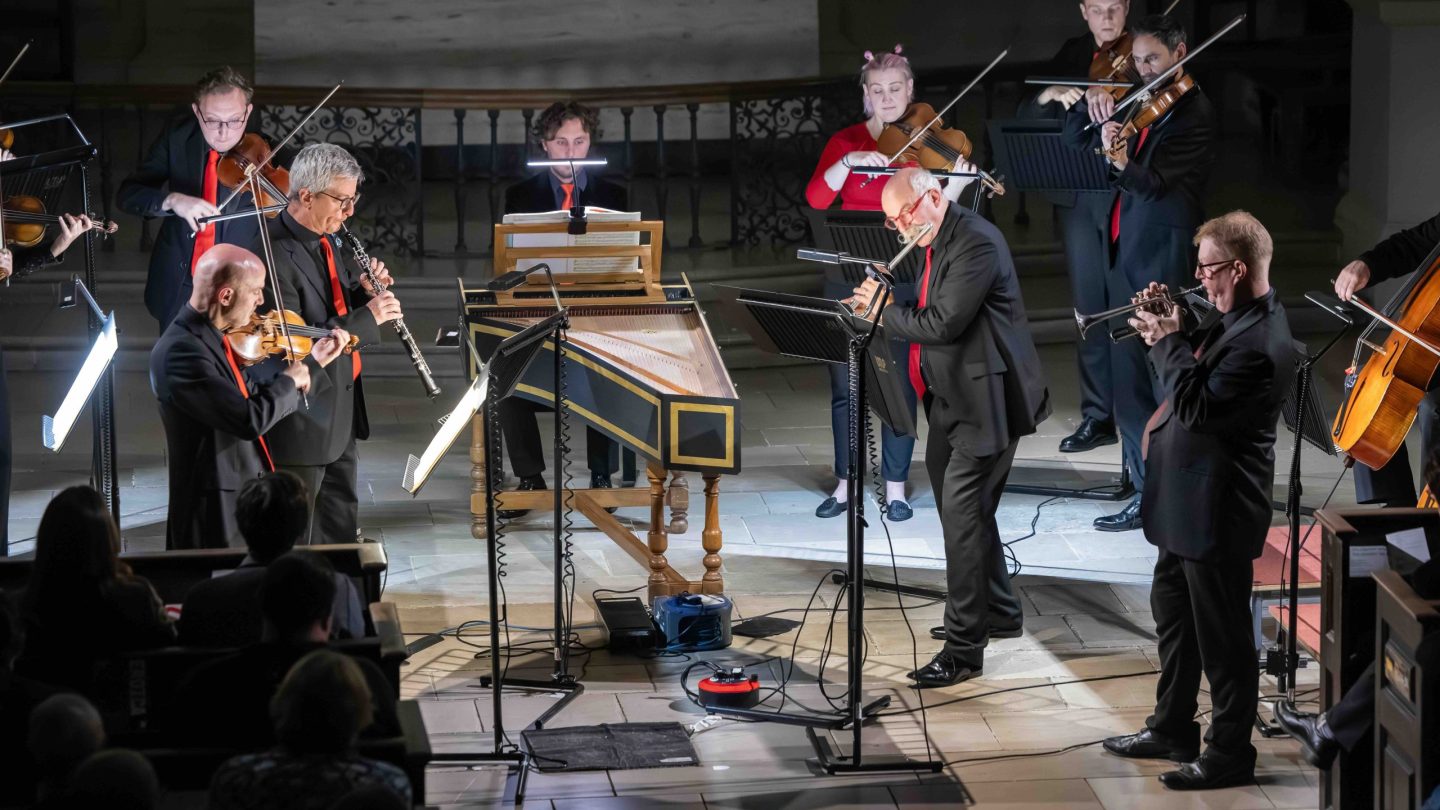
Bach was the supreme master of counterpoint, that is, the weaving together of similar themes played at different entry points and different pitches. So in fact the four solo parts in Brandenburg Concerto No.2 are very similar, the same material is handed around, almost like a conversation. The exception is the slow movement, where the trumpet is silent: in the Baroque era brass instruments didn’t have valves, and so couldn’t play in minor keys. But the trumpet makes a triumphant comeback in the finale!
What is marvellous about this music is the confidence of the mood, a movement is either wholly lively and upbeat, or totally sad – there is no questioning the status quo, no Romantic dithering!
What’s it like to perform without a conductor?
Playing without a conductor is liberating! Though I wouldn’t want to be without one in, say, a Brahms symphony, with the small number of players in this style of music, where each movement stays in the same mood and tempo throughout, we can communicate well enough among ourselves.
Tell us about your approach to interpreting works by Bach – does it differ to other composers?
The way we play Baroque music now is very different from, say, sixty years ago, before the authentic instrument movement began. Back then, Bach was treated very reverentially, and generally played in a rather Victorian manner, slowly and solemnly. But we realise now that his music can be fun and exciting. We no longer put Bach (or for that matter Mozart) on a pedestal but try to portray the feeling of the music – even the slow movements can be dramatic!
We no longer put Bach (or for that matter Mozart) on a pedestal but try to portray the feeling of the music - even the slow movements can be dramatic!
How does the modern oboe differ to the instrument this music was originally written for?
The Baroque and modern oboes are quite different: the fingerings of the earlier oboes are similar to those of the recorder, as it has only a couple of keys. The reed is wider, and held more loosely in the mouth, and the wood they are made from is much lighter. This makes for a softer sound, which was well matched with the gut string sound of the string instruments of the time. Apart from all the extra keys, the modern oboe is made of a hard, dense wood and is therefore more resonant, matching the more powerful modern string instruments with their steel strings. The general trend over time has been for more sound, to fill bigger halls.
You might also like these
Side of vodka with your Vivaldi?